


Herbal vs. Ayurvedic Medicine: What’s the Difference and Which Is Right for You?
When it comes to natural healing, it’s easy to feel lost in the maze of herbs, remedies, and bold claims. Many people casually use the terms “herbal” and “Ayurvedic” as if they were the same—but in reality, while both draw from nature, they stem from very different traditions.
If you like natural healing more than synthetic pills and see wellness as a way of life—not just a prescription—knowing the difference between herbal and Ayurvedic medicine isn’t just a small fact. It’s knowledge that helps you make better choices for your body, mind, and spirit.
What Is Herbal Medicine?
Herbal medicine is among humanity’s oldest healing traditions, practiced in countless cultures for thousands of years. It taps into the therapeutic properties of plants—leaves, roots, bark, seeds, and flowers—to ease symptoms and encourage wellness.
Key Traits of Herbal Medicine
- Draws on individual plants or simple combinations
- Targets specific symptoms or conditions
- Found in teas, tinctures, capsules, powders, and oils
- Used in both traditional folk remedies and modern supplements
- Ginger: Calms nausea, aids digestion.
- Turmeric: Reduces inflammation.
- Peppermint: Soothes headaches and gut troubles.
- Chamomile: Supports sleep and relaxation.
Examples You’ll Recognize

Herbal medicine is often the gateway for people exploring natural health—straightforward, approachable, and effective for everyday issues.
What Is Ayurveda?

Ayurveda, literally “the science of life,” is a 5,000-year-old Indian medical system acknowledged by the WHO. Unlike herbal medicine, Ayurveda is not just a collection of remedies—it’s a full philosophy of living.
- Dosha Theory: Each person is a blend of three doshas—Vata, Pitta, and Kapha. Imbalances create illness.
- Herbal Allies: Ashwagandha, tulsi, and triphala are staples.
- Lifestyle & Diet: Daily routines (Dinacharya), seasonal rhythms (Ritucharya).
- Therapies: Panchakarma detox, yoga, meditation, and breathwork.
Core Elements of Ayurveda
- Triphala Churna: Supports digestion, detox.
- Ashwagandha: Reduces stress, boosts vitality.
- Tulsi Tea: Clears sinuses, enhances immunity.
- Nasya Therapy: Herbal oils applied through nostrils to ease sinus and respiratory issues.
Popular Ayurvedic Practices
In short, Ayurveda addresses the root of imbalance, not just the outward symptom.
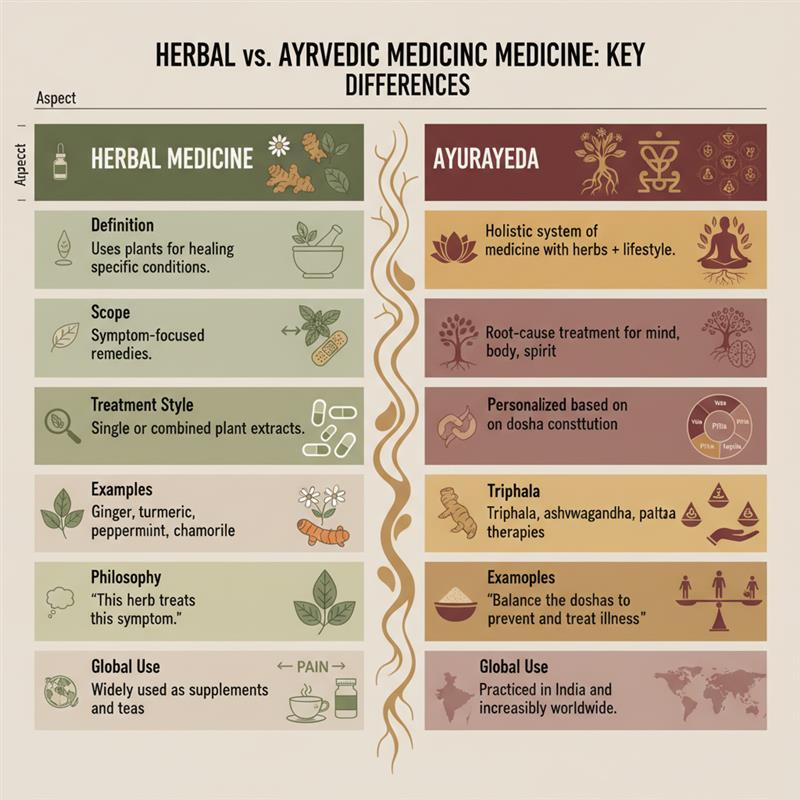
Herbal vs. Ayurvedic Medicine: Key Differences
| Aspect | Herbal Medicine | Ayurveda |
|---|---|---|
| Definition | Uses plants for targeted healing | Holistic system combining herbs, diet, and lifestyle |
| Scope | Symptom-focused | Root-cause, whole-person approach |
| Treatment Style | Single or blended plant extracts | Personalized based on dosha |
| Examples | Ginger, turmeric, peppermint | Triphala, ashwagandha, panchakarma |
| Philosophy | “This herb fixes this symptom.” | “Balance the doshas to prevent and heal.” |
| Global Reach | Widely used as teas/supplements | Growing recognition worldwide |
So while herbal medicine is often a subset of Ayurveda, Ayurveda itself is much broader.
Benefits and Limitations of Herbal Medicine
Perks
- Affordable and widely available.
- Effective for mild issues like coughs, digestive discomfort, headaches.
- Fewer side effects (when used properly).
Drawbacks
- Addresses symptoms but not the deeper cause.
- Can interact with prescription drugs.
- “One-size-fits-all”—not always personalized.
Benefits and Limitations of Ayurveda
Strengths
- Custom-tailored to your dosha type.
- Prevention-focused and long-term oriented.
- Integrates herbs, diet, and lifestyle.
- Effective for chronic conditions.
Challenges
- Requires consistent lifestyle commitment.
- Results are gradual, not instant.
- Works best under trained guidance.
When Should You Choose Herbal vs. Ayurvedic Remedies?
- Triphala Churna: For quick, natural relief of minor everyday issues.
- Ashwagandha: For recurring problems, chronic imbalances, or preventive care.
- Tulsi Tea: Use herbs for fast relief and Ayurveda for long-term balance.
Conclusion
Both herbal and Ayurvedic medicine are powerful allies, but their strengths point in different directions. Herbal remedies often bring quick, plant-based relief—like when I used fresh ginger tea to calm relentless migraines during a stressful work period. Ayurveda, however, digs deeper, offering a whole-life framework to restore lasting balance.
Research backs this up: a 2020 JAMA study found nearly 38% of U.S. adults use some form of complementary or alternative medicine, with Ayurveda steadily gaining recognition for its holistic benefits. As Dr. Anil Kumar, senior Ayurvedic physician at the All India Institute of Ayurveda, puts it: “Herbs treat the symptom, but Ayurveda treats the person—mind, body, and environment together.”
If you’re dealing with chronic imbalances or want preventive care, Ayurveda may be the wiser path. For everyday ailments like a cold or stomach upset, herbal remedies can work beautifully. Still skeptical? That’s natural—many worry about safety or standardization. The key is to seek certified herbs, consult qualified practitioners, and avoid self-diagnosing. Done responsibly, these natural systems complement, not compete with, modern medicine.